eBike Safety 101: Essentials for New Riders & Parents

Why eBike Safety Matters
The first time someone rides an electric bike, it usually leaves a strong impression. With a slight push of the pedals, the electric power begins to kick in, and suddenly, hills are easier and distances feel shorter. A ride that used to take 20 minutes can be done in half the time, and you arrive without being completely worn out.
That mix of speed, convenience, and fun is a huge reason eBikes have exploded in popularity. More than 1.7 million eBikes were imported into the United States in 2024, and the numbers are expected to keep growing. In California especially, communities are seeing more people riding eBikes for commuting, recreation, and everyday transportation.
But that growth has come with a downside.
Emergency rooms across the country are seeing a sharp rise in eBike-related injuries. Data from the U.S. Consumer Product Safety Commission shows injuries increased from about 3,500 in 2017 to more than 24,000 in 2022, with even higher numbers reported in 2023 and beyond. In many of these cases, the rider was new to eBikes and didn’t fully understand basic safety practices.
Understanding eBike safety is important for all riders, especially those who are new to this type of transportation.
Focusing on eBike safety is more important than ever, as awareness of safe practices can lead to better riding experiences and fewer crashes.
The good news is that most of these crashes are preventable.
Practicing good eBike safety habits can significantly improve your safety on the road.
Simple habits like wearing a helmet, making yourself visible, and following traffic laws can dramatically reduce the risk of getting hurt (or worse).
At VoltVerified, our goal is to help riders and parents understand these basics through education and hands-on training. This guide covers the core safety fundamentals every new eBike rider should know before heading out.
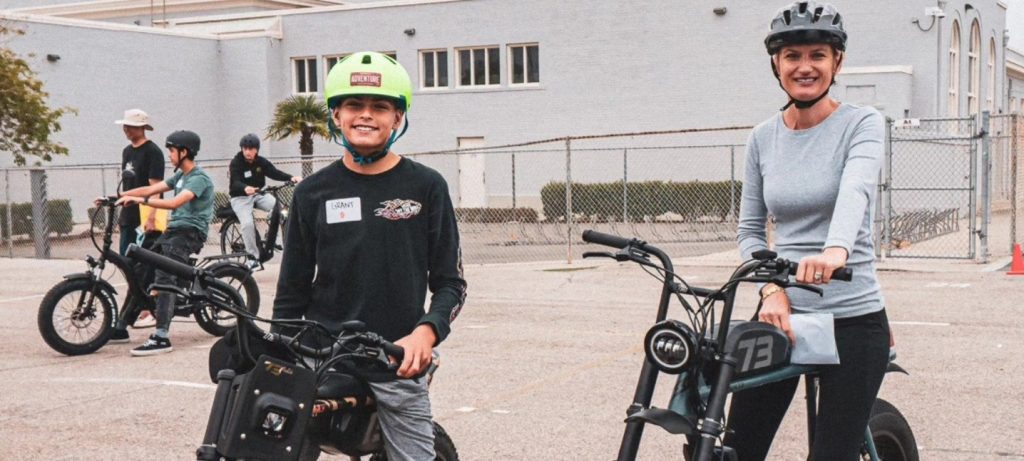
Learn These Skills in a VoltVerified Training Event
VoltVerified works with law enforcement agencies and schools to deliver hands-on rider training programs.
✔ braking control
✔ obstacle avoidance
✔ real-world riding skills
Helmet Use: Your First Line of Defense
Taking the time to understand eBike safety can save lives and prevent serious injuries.
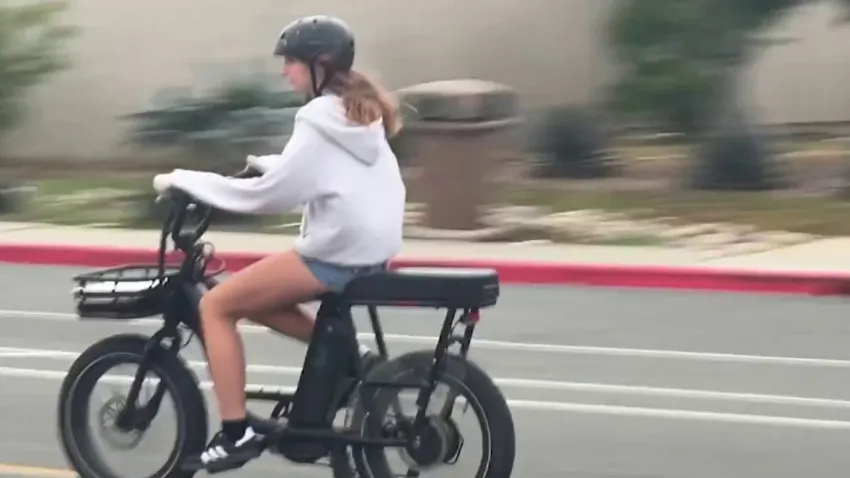
If there’s one piece of safety equipment every rider should wear, it’s a helmet.
eBikes travel faster than traditional bicycles, which means crashes can happen harder and faster as well. In many collisions, the head is the most vulnerable part of the body.
Research consistently shows helmets can reduce the risk of serious head injury by 60–70 percent. Yet many riders—especially teens and new riders—still choose not to wear one.
Head injuries remain the most serious outcome in bicycle and eBike crashes. National data shows most bicyclist fatalities occur in urban areas, where riders interact with vehicle traffic.
A helmet won’t prevent every injury, but it can often make the difference between walking away from a crash and suffering a life-changing injury.
Choosing the Right Helmet
Not all helmets are the same. When buying one for eBike riding, look for:
- CPSC certification (Consumer Product Safety Commission)
- ASTM certification for higher impact protection
Many modern helmets also include MIPS (Multi-Directional Impact Protection System), which helps reduce rotational forces during angled impacts—something common in eBike crashes. VoltVerified recommends MIPS helmets as the standard – no matter what class eBike you ride. A bit more costly, but well worth the protection.
For higher-speed riding or off-road use, riders sometimes choose:
Choosing the right gear enhances eBike safety and boosts confidence while riding.
- Extended coverage helmets
- Full-face helmets for rough terrain
- Helmets with built-in lights
Most importantly, make sure it fits properly. Also, make sure it’s not sitting on your handle bars while your riding around (what’s the point?!)
Proper Helmet Fit
A helmet only works if it fits correctly.
Follow these simple steps:
- Position the helmet low on your forehead, about two finger-widths above your eyebrows.
- Adjust the side straps so they form a “V” shape under each ear.
- Tighten the chin strap so it is snug but comfortable.
- The helmet should not move forward or backward when you shake your head.
If it slides around, it’s too loose.
Helmet Laws in California
California law requires all riders under 18 to wear a helmet when riding a bicycle or eBike.
Helmet laws support eBike safety by ensuring all riders take necessary precautions.
For Class 3 eBikes, helmets are required for all riders regardless of age.
Even when the law doesn’t require it, wearing a helmet is simply the smart choice.
As of 2026, new regulations also require many eBikes sold in California to meet UL battery safety standards such as UL 2849 or UL 2271. While these rules focus on equipment safety, they also help improve overall rider protection.
When to Replace a Helmet
Helmets are designed to absorb impact energy, which means they work only once before needing to be replaced.
You should replace a helmet:
- After any crash where your head hits the ground
- If you see cracks or visible damage
- Every 3–5 years, depending on manufacturer recommendations
Think of helmets like airbags in a car—once they do their job, it’s time for a new one.
Visibility Gear: Be Seen to Stay Safe
One of the most common causes of bicycle crashes is simple:
Drivers didn’t see the rider. In Huntington Beach, which leads all California cities in the number of eBike crashes, approximately 1 out of every 4 eBike collisions involved a rider who was not at fault, meaning something else—most often a vehicle—caused the crash.
Visibility is one of the easiest ways to reduce your risk on the road. Studies show more than half of cyclist fatalities occur in low-light conditions, such as dusk, dawn, or nighttime.
Maintaining visibility is a key component of eBike safety that every rider should prioritize.
Even during the day, riders who blend into the background can be difficult for drivers to notice.
Making yourself visible is one of the simplest safety improvements you can make.
Essential Visibility Equipment
Every eBike rider should consider using:
Front White Light
Helps you see the road and alerts others that you’re approaching.
Rear Red Light
A flashing light makes you much easier for drivers behind you to see.
Rear Reflector
California requires eBikes to have a rear red reflector that reflects headlights back toward vehicles.
Reflective Clothing
Bright clothing, reflective jackets, and ankle straps dramatically increase visibility.
Wheel or Spoke Reflectors
Reflectors on spinning wheels create movement that drivers recognize quickly.
Daytime Visibility Matters Too
Many riders think lights are only for nighttime.
That’s not true.
A large number of crashes happen during the day in busy areas where drivers are distracted or scanning quickly for traffic.
Investing in visibility gear is a smart step towards enhancing eBike safety on the road.
Bright clothing and daytime running lights make riders much easier to spot.
✅ VoltVerified recommends always having your front headlight on, no matter the time of day or night.
Simple Visibility Tips
To stay visible on the road:
- Avoid dark clothing when riding in traffic
- Use lights even during the day
- Ride where drivers can see you in their mirrors
- Always look to make eye contact with drivers at intersections and driveways
Giving drivers more time to see you can prevent crashes.
Ironically, many riders invest in powerful motors for speed—but skip the simple lights that could help prevent a collision.
Road Rules for eBikes: Know Before You Go
Following road rules is mandatory for eBike safety and the well-being of all road users.
Some new riders think eBikes follow different rules than bicycles.
In most cases, they don’t.
Understanding where you can ride and how to interact with traffic is essential for riding safely.
eBike Classifications in California
California defines three types of eBikes. If a device doesn’t fit into one of these categories, it is not legally considered an eBike, regardless of what a manufacturer claims.
Class 1
- Pedal assist only
- Motor assistance up to 20 mphn (on flat ground)
- Allowed on most bike paths and trails
Class 2
- Includes a throttle
- Motor assistance up to 20 mph (on flat ground)
- Allowed where bicycles are permitted
- Some cities have age limits on Class 2 eBikes so be sure to check your local regulations
Class 3
- Pedal assist only (cannot have a throttle outside of walk-assist mode, 3.7 MPH max)
- Motor assistance up to 28 mph
- Allowed on roads and bike lanes
- Helmet required
- Riders must be 16 or older
These classifications help ensure faster eBikes are used in appropriate areas.
👉 Beware of misleading advertising by manufacturers. Read the fine print on their website descriptions and in the device manual, and reach out to us if you have any questions.
Where You Can Ride
Most cities allow eBikes on:
- Bike lanes
- Public streets
- Shared roadways
- Some multi-use paths
However, Class 3 eBikes are generally not allowed on bike paths or trails unless local rules specifically allow them.
✅ Always check local city regulations. Sidewalk riding often comes down to local laws, so make sure you know whether you can or can’t ride your eBike on the sidewalk in your city.
Basic Riding Etiquette
Safe riders are predictable riders.
Follow these basic rules:
- Ride in the same direction as traffic
- Obey stop signs and traffic signals
- Signal your turns
- Yield to pedestrians
- Avoid riding fast on crowded sidewalks
Common mistakes can jeopardize eBike safety, so always stay vigilant while riding.
- Provide an audible sound (e.g. horn, saying “on your left”) before passing others
It’s also best to avoid headphones that block out surrounding traffic noise – ensuring you never cover both ears at the same time (it’s the law).
Common Mistakes New Riders Make
Some of the most common mistakes include:
- Riding too fast around pedestrians
- Ignoring stop signs
- Riding against traffic
- Using throttle suddenly in crowded areas
These actions make riders unpredictable and increase the chance of crashes.
A safer approach is to ride defensively and always expect the unexpected.
Ignoring road rules doesn’t change physics—and crashes tend to prove that quickly.
A Few More Thoughts
eBikes are an incredible way to get around, stay active, and connect with your community.
But like any device, they require responsible riding.
Focusing on the basics—wearing a helmet, staying visible, and following traffic laws—can dramatically reduce your risk of a crash.
At VoltVerified, we believe education is one of the most powerful tools for preventing injuries. That’s why we work with communities, schools, and law enforcement agencies to deliver real-world rider training.
For new riders, learning these fundamentals is the first step toward riding safely.
Ready to take the next step?
Contact us to join a VoltVerified training event to build the skills and confidence needed to ride safely in your community.
Your safe ride starts with knowledge.
VoltVerified: Powering Safety
By: Mike Thomas
Founder of VoltVerified and Sergeant with the Huntington Beach Police Department. Mike works with law enforcement agencies across California to improve eBike safety through training and education.




Responses