Device classification
Distinguish eBikes, mopeds, pedal eMotos and eMotos using design, power, throttle and speed capability.
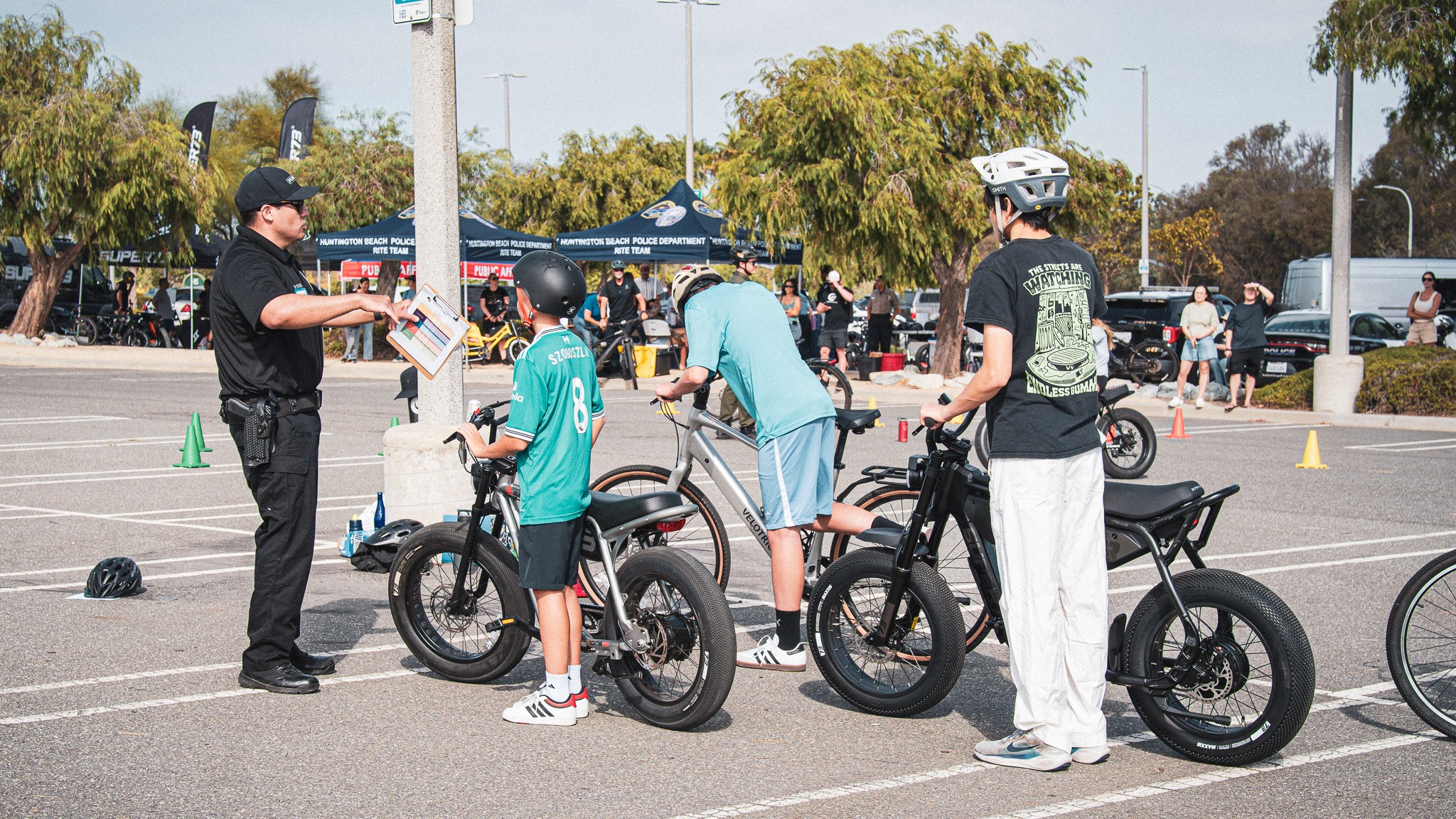
A five-day course for sworn personnel who will identify devices, apply California law, demonstrate rider skills and deliver structured instruction.
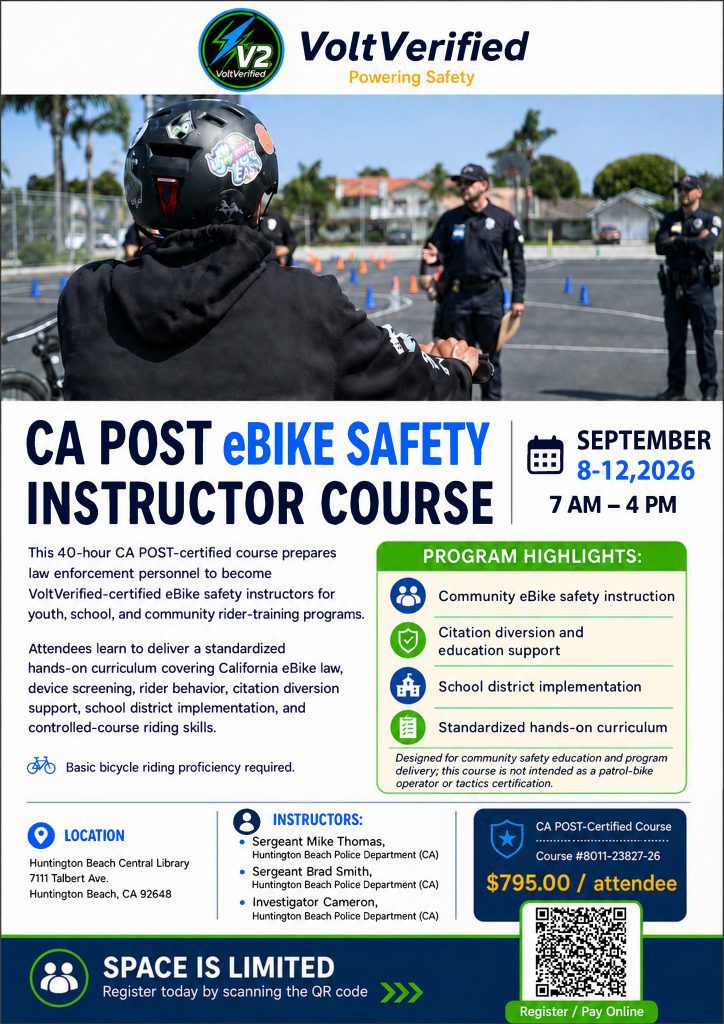
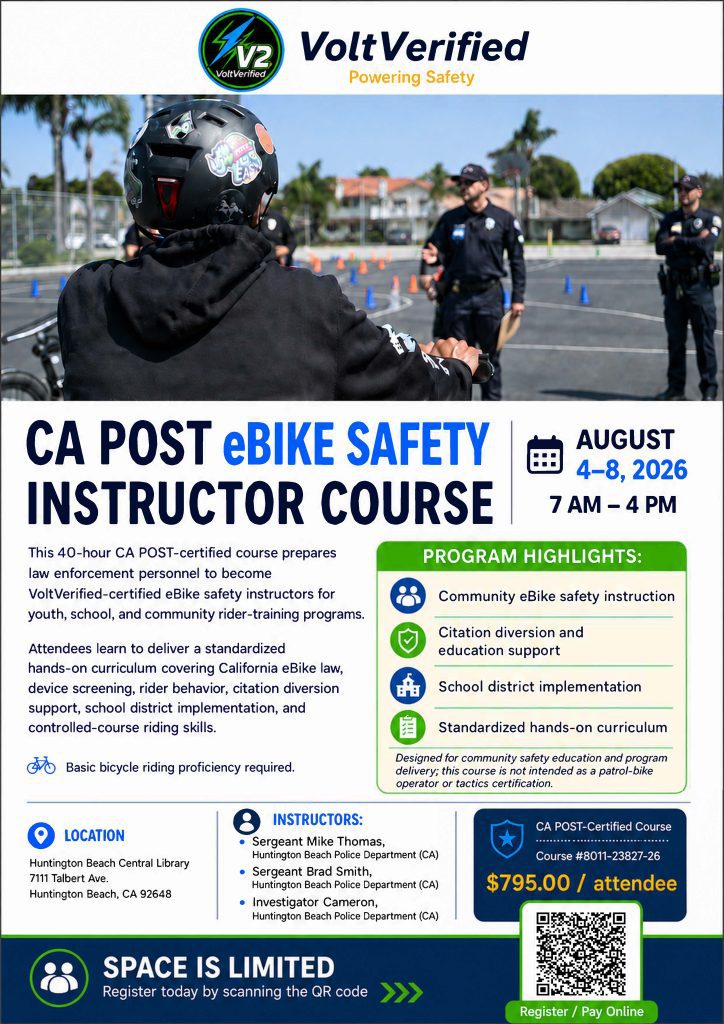
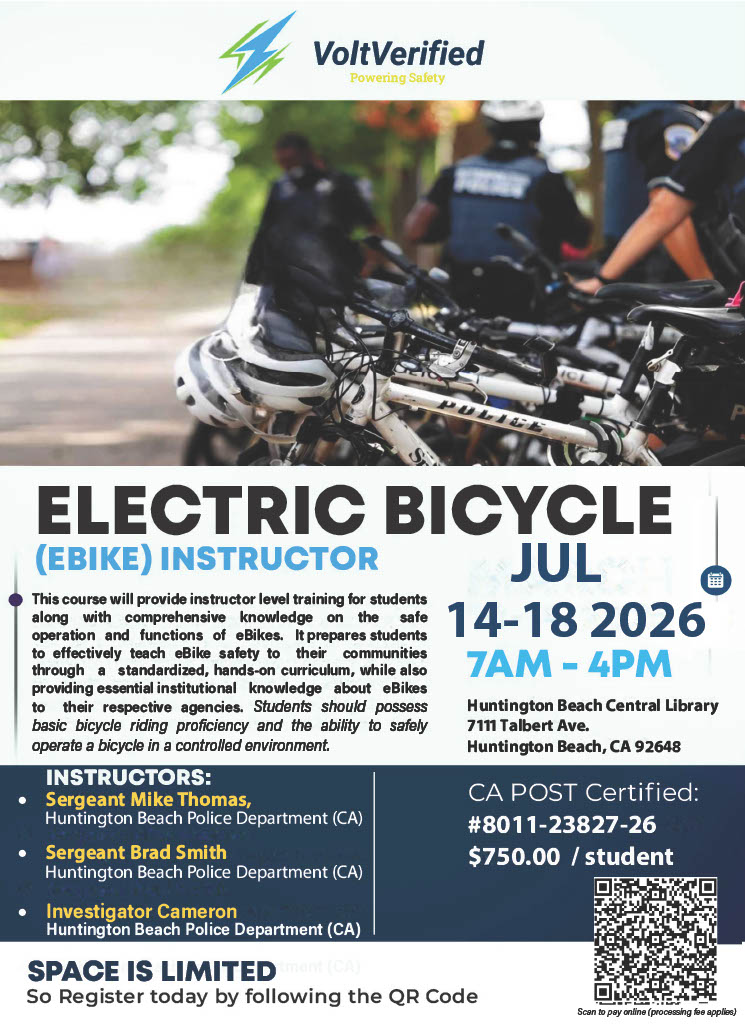
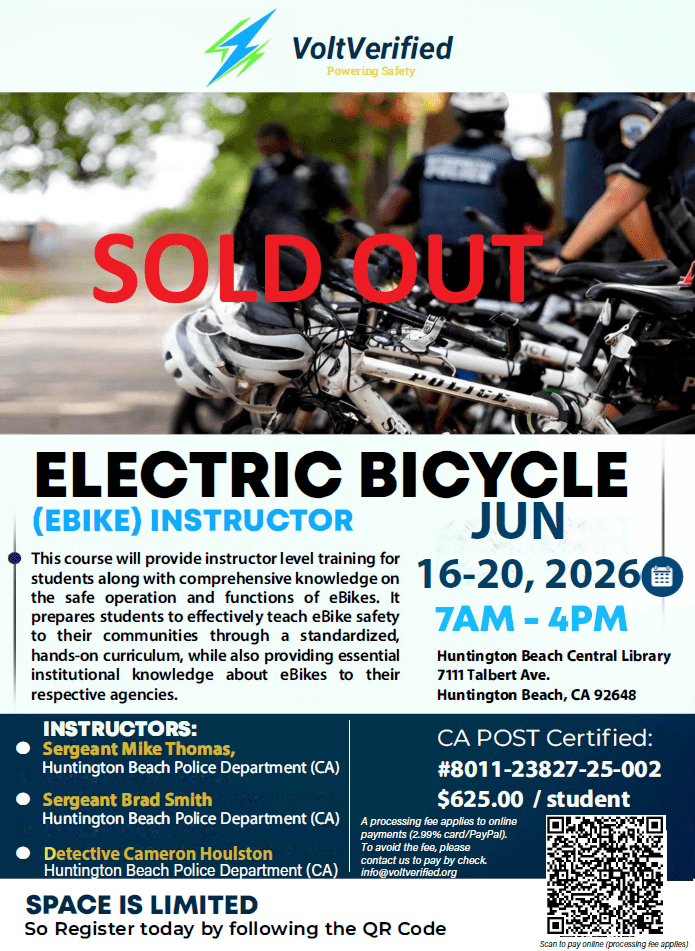
Open an upcoming flyer at full size to review course details and use its embedded QR code for registration and payment. Previous flyers remain available below for agency reference.
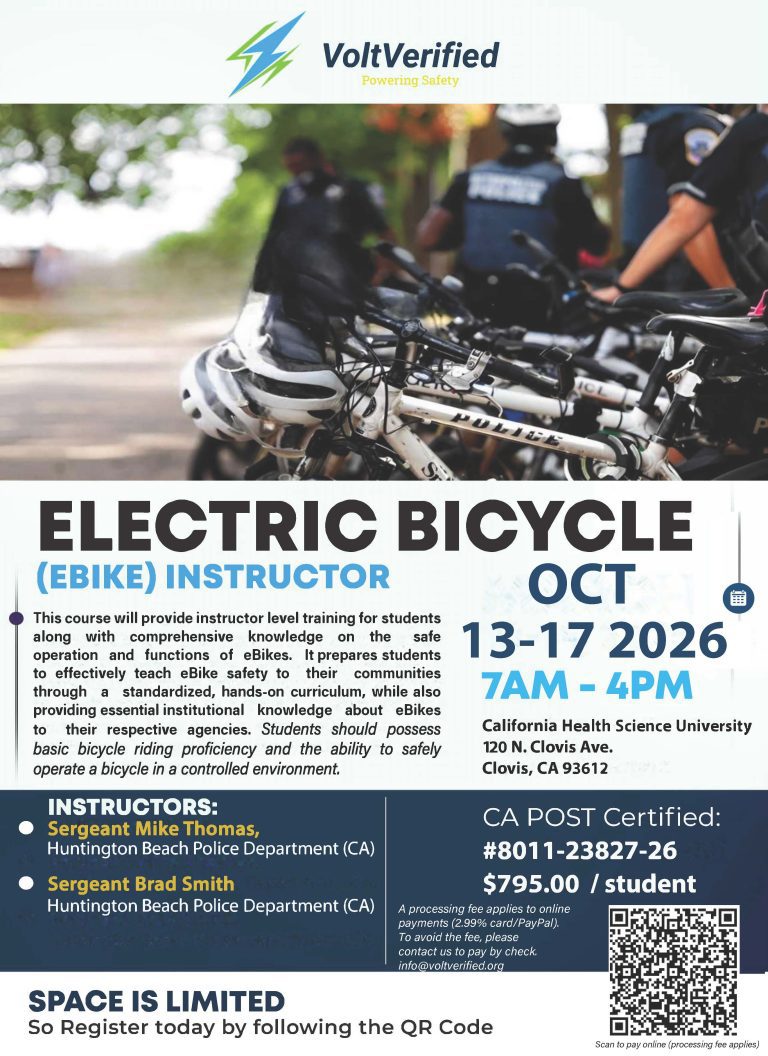 Full Flyer + Registration QR ↗
Nov 10–14 · Upcoming
Full Flyer + Registration QR ↗
Nov 10–14 · Upcoming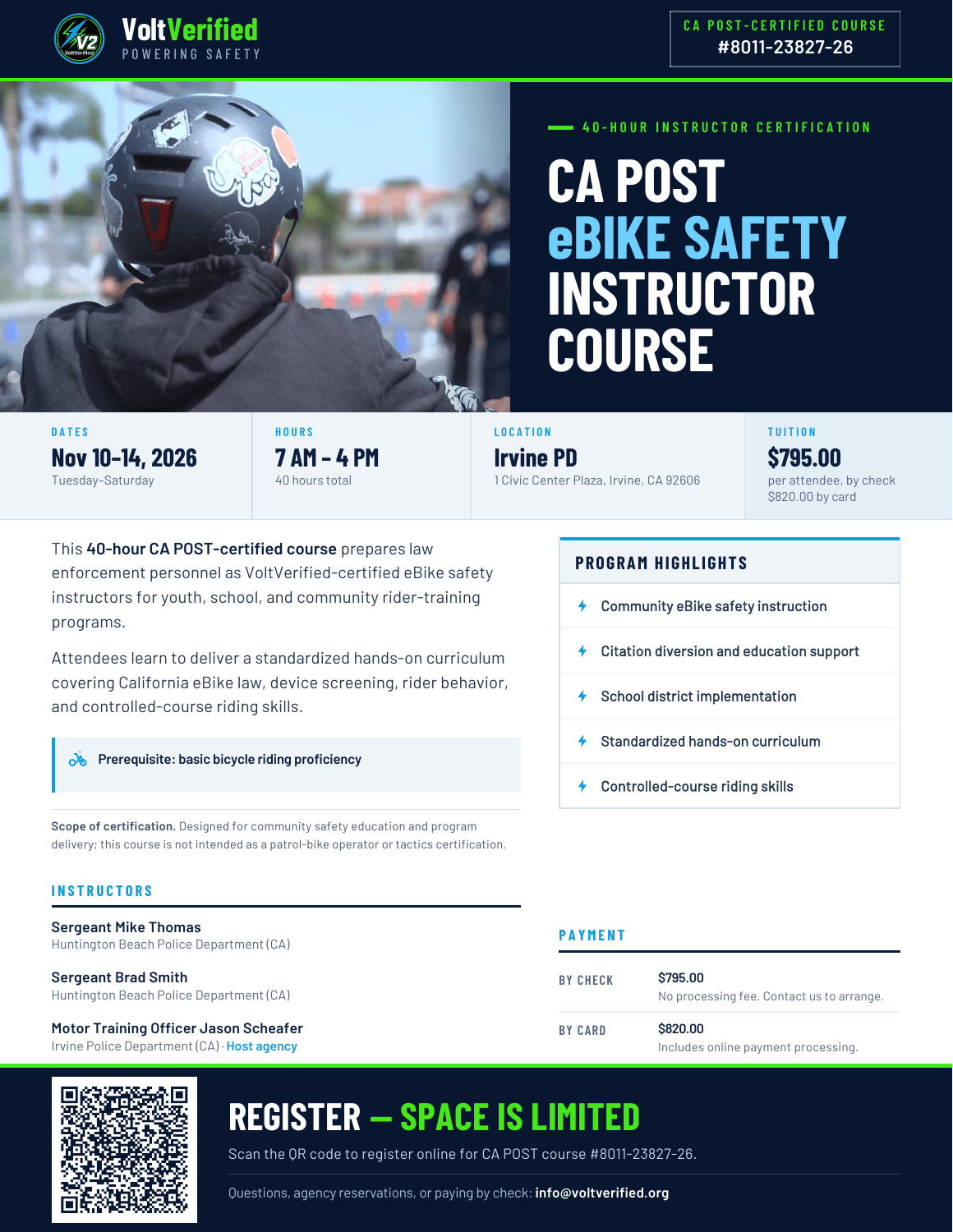 Full PDF Flyer + Registration QR ↗
The course combines device and legal knowledge with the riding and instructional skills needed to evaluate and teach others.
Distinguish eBikes, mopeds, pedal eMotos and eMotos using design, power, throttle and speed capability.
Connect device classification to Vehicle Code provisions, equipment requirements and lawful operation.
Develop the riding ability needed to demonstrate skills and evaluate safe device operation.
Deliver structured local training, coach riders and document performance.
Course-specific training materials and evaluation methods are provided within the certified instructor framework.
VoltVerified reviews aggregate collision and program information to refine youth education, instructor preparation and enforcement conversations. These observations help frame questions for training and policy; they do not establish cause and effect.
Reviewed collisions involved riders under 18. Youth readiness remains a focus for instruction and family guidance.
These are separate categories in the 394-collision review. Accurate device identification helps focus education and enforcement.
Youth at-fault collisions after training began involved riders who had not previously attended the program. Three involved riders with prior attendance.
Youth collisions were categorized as not the rider’s fault; 116 were at fault. Training and policy discussions must consider the wider road environment as well as rider decisions.
of youth riders with known helmet status were wearing a helmet: 139 wore one and 26 did not.
Reviewed collisions occurred at intersections. This supports keeping scanning, right-of-way decisions and crossing judgment central to practice.
We use these findings alongside instructor experience to revisit device-identification lessons, hazard scenarios, parent guidance and field evaluation. The same review informs discussions about enforcement priorities and youth eBike policy.
Scope. Findings come from aggregate collision and program data reviewed in connection with VoltVerified programming. The collision review covers September 2024 through August 2026. It is a defined set of reviewed records, not a national sample or a pooled measure of all VoltVerified programs. These figures do not imply that VoltVerified independently collected or owns all underlying records.
Counts and categories. The 394 collisions include all reviewed device types. The review groups eBikes, unauthorized electric devices, eMotos and scooters separately; motor-driven cycles are included in the unauthorized-device group. These analysis categories are not substitutes for identifying a specific device under applicable law. Thirteen records with missing age remain in the total and are not counted as youth. Helmet percentages exclude records with unknown helmet status.
Training observation. The 81 youth at-fault collisions occurred after the first class in May 2025 through August 2026. Attendance means participation before the collision. Earlier classes were riding-only; combined classroom and hands-on training began in March 2026. The count therefore spans different program formats.
Interpretation. These are descriptive observations, not evidence that training caused a reduction in collisions. Rider exposure, enrollment and follow-up time differ, and the review does not provide comparable trained and untrained cohorts. No trained-rider collision rate or effectiveness estimate is presented. “Not at fault” combines driver-fault and other circumstances.
Aggregate findings only. No individual collision details are published. The data do not imply endorsement by any agency.
VoltVerified instructors lead classroom instruction, coach controlled riding and evaluate officer readiness to deliver consistent training through their agencies.
Current footprintCurrent instructor opportunities support California POST-certified Course #23827. Law-enforcement professionals outside California may also submit interest for future regional training.
Instructor Interest →Thank you. VoltVerified will review your background and follow up about next steps.
Course graduates return to their agencies with a consistent approach to device classification, enforcement and rider instruction.
VoltVerified support is optional. Agencies can move forward independently or bring us in when an event or established program needs added capacity.
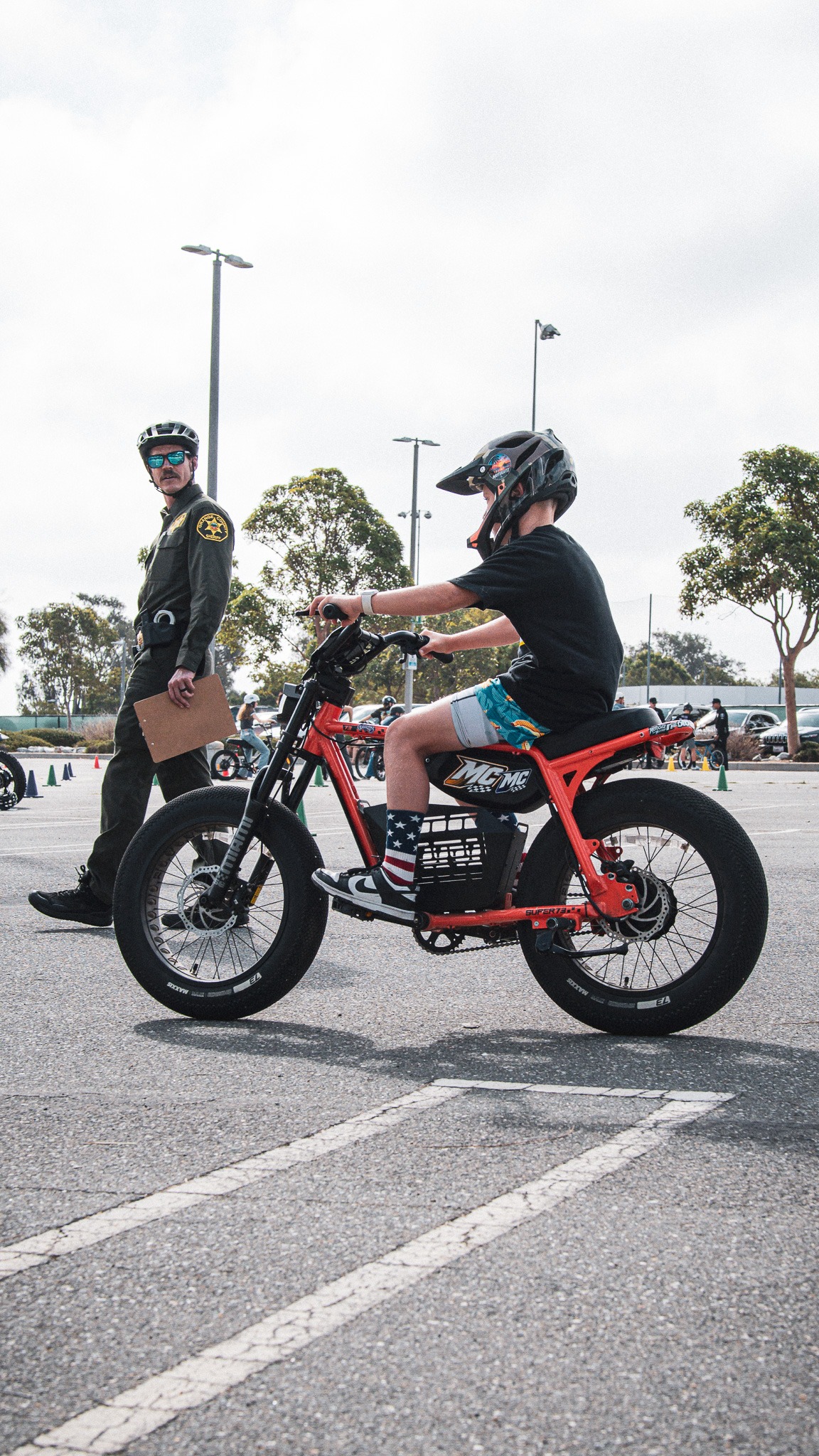
VoltVerified can work alongside your agency on an upcoming event—whether it is the first, tenth or part of an established program. Support can include planning, diversion, registration, staffing, equipment, logistics and delivery, with your team retaining the process for future events.
 Yellow8
 Purple18
 Red24
Red24 Green12
 Blue18
The current 80-cone set is prefilled in the request form. Change any color or quantity to match what your agency needs. VoltVerified will confirm pricing and availability before anything is ordered.
Request Cone Order → Champion Sports 12-inch flexible vinyl cone specifications ↗Support is optional. Use this form for a first event, a later event or an established program that needs added capacity. Your selections and contact details are sent directly to VoltVerified.
Choose the five cone quantities and tell us where to send pricing and availability.
Review current course flyers and dates, or contact VoltVerified about hosting a regional California POST course.