Beyond Minimum Age: A Better Standard for Youth eBike Safety

Beyond Minimum Age:
A Better Standard for Youth eBike Safety
The case for a Supervised-to-Certified Model that uses age to guide supervision while making demonstrated readiness the standard for independence.
Updated
There’s no question we have a youth eBike safety problem. Injuries are increasing. Families are buying vehicles they do not always fully understand. Kids are entering traffic without meaningful instruction. And increasingly, high-powered electric motorcycles are being ridden—and reported—as “eBikes” even when they do not legally qualify as eBikes at all.
We need to act. I’m just not convinced the answer is to pick an age and assume every child below it is incapable of riding safely.
I come at this from a few different angles: as a law-enforcement professional, as someone who works directly with young riders and parents, and as a father. My children are 9 and 12. I’m comfortable with both of them riding lawful eBikes when my wife or I are directly supervising them. I’m not yet comfortable sending either of them out alone.
The central idea
Age should help guide supervision.
Demonstrated competency should determine independence.
01 — The evidence
The data show a clear problem. Age alone does not tell us who is ready to ride.
California’s statewide injury trend
A 2026 UC San Diego statewide analysis looked at 4,035 reported eBike collisions and more than 58,000 traditional bicycle collisions in California between 2018 and 2024. Reported eBike collisions increased from just two in 2018 to 1,506 in 2024. Children 14 and younger made up a larger share of injured eBike riders than injured traditional bicyclists, and moderate-to-severe injuries were also more common among the eBike group.
Read the UC San Diego analysis.
Orange County pediatric trauma
The Orange County numbers are just as hard to ignore. Rady Children’s Health Orange County reported 201 pediatric eBike trauma patients in 2025, compared with 125 in 2024 and just one in 2021.
One patient in 2021 and 201 in 2025 at this hospital.
Reported in 2024 in the UC San Diego statewide analysis.
VoltVerified collision review, September 2024–August 2026. Riders of all ages.
Pediatric eBike trauma patients at Rady Children’s Health Orange County
Reported eBike injury collisions · California
Those numbers make one thing clear: there is a real problem and we need to respond. But the numbers alone do not tell us what the right age cutoff should be. eBike ownership and use also grew substantially during this period, so rising injury counts need to be understood in that larger context.
What the pediatric evidence says about younger riders
A November 2026 study in JAMA examined injuries treated at six U.S. pediatric health systems. Roughly one in four of the children treated for an eBike injury was under 12. The American Academy of Pediatrics advises families to avoid eBikes for children under 12 and to choose only a Class 1 eBike for a 12- to 15-year-old who is ready to ride.
Read the JAMA study. Read the AAP’s guidance for families.
My proposal leaves more room for families than that guidance does. For me, the difference is who is riding with the child. On a supervised ride, my wife or I can choose a quieter route, ride close enough to give directions, and stop together before a difficult crossing. On a solo ride, our child has to see that hazard and decide what to do. The study did not measure how supervision changes injury risk. That is a question I would want a pilot to track.
02 — Local age limits
What an age limit means on a family ride
The City of San Diego
San Diego prohibits children under 12 from operating a Class 1 or Class 2 eBike on public rights-of-way, in parks, on paths and trails, and in other areas open to bicycle travel. A parent riding alongside the child does not create an exception. A family visiting from another California city can face a different rule on the same bike.
Read San Diego Municipal Code § 84.19.
New Jersey goes further, setting the minimum operating age at 15. What matters to me in both cases is the decision the age limit makes for a family. It rules out a supervised ride as well as a solo one. Where local law permits, I would keep a way for a parent to teach a child on a lawful device before that child ever rides alone.
The New Jersey Motor Vehicle Commission outlines the requirements here.
03 — Schools
What should a student demonstrate before earning a campus permit?
On August 27, California enacted AB 1569. It directs the California Department of Education, working with the California Highway Patrol, to develop a standardized eBike safety and training program for grades 7–12 by March 1, 2028. The program must include online instruction and a knowledge assessment. The law also encourages schools and parent organizations to work with local agencies on demonstrations for students and families.
Read the enacted text of AB 1569.
Newport-Mesa Unified School District is a good example. To its credit, the district is taking the issue seriously. Its 2026–27 approach includes education, testing, helmets and accountability.
What Newport-Mesa gets right
Education, testing, helmets and accountability.
Those are meaningful tools, and they show that schools can tie campus riding privileges to education and responsible behavior.
Where I disagree
Removing eBikes from campus does not remove the safety problem from the community.
Newport-Mesa prohibits students in TK–8 from bringing eBikes onto school property. At Ensign Intermediate School, some students kept riding to school and parked in the neighborhood. In August, residents told CBS Los Angeles that parked bikes were blocking their walkways. On November 12, CBS reported new parking restrictions on nearby streets and about 75 eBikes near the racks at John Wayne Park, a short walk from campus.
District policy · CBS Los Angeles, August 27 · CBS Los Angeles, November 12
I understand why neighbors want their walkways clear. What concerns me is the ride those students are still making. A student who parks at John Wayne Park still has to judge when to enter an intersection and when to yield on the way home. I’d use the opportunity to park on campus to bring that rider and a parent in to practice those skills.
Want the privilege of riding a lawful eBike to school? Earn it.
I would have a parent attend, verify that the device qualifies as an eBike and ask the student to demonstrate three things on it: stop under control, check over a shoulder while holding a straight line, and signal and complete a turn. A school could use that assessment to issue a permit to bring the eBike onto campus. A restriction on riding on public roads would need separate legal authority. AB 1569 creates a training program and leaves that broader policy question open.
Most young riders and parents I have encountered are not looking for ways to break the law. More often, they simply do not know what they do not know.
Those families are reachable. In my experience, they are also the norm. Policy should not be built only around the worst behavior we see.
04 — The proposal
A different approach: Supervised-to-Certified.
Age still matters. The difference is that I do not believe it should be the only measure of whether a young rider is ready. The age ranges in this model are intended as practical guardrails—setting different levels of supervision and training as kids get older—while still allowing demonstrated competency to matter.
I would pilot age 13 as the earliest point to assess a young rider for independence. Until a rider passes, supervised practice can continue wherever the class and the rider’s age are lawful. A riding assessment gives a family a starting point. The parent still has to decide whether that child is ready for the particular route.
We already use a version of this approach with young drivers. Age helps determine the level of oversight, but education, testing, restrictions and demonstrated competency also play a role in how much independence a young driver receives. I think youth eBike policy can follow the same basic idea: more supervision when riders are younger, followed by greater independence as they demonstrate they are ready for it.
Proposed policy model
The Supervised-to-Certified Model
A proposed standard for riders through age 17. State and local age and device restrictions apply at every stage.
From ages 13–17, every rider seeking independence takes an on-bike assessment for the class they intend to ride. At 16–17, a driver’s license may satisfy the general traffic-law portion. Everyone still demonstrates the riding skills.
Class 1 or 2 only, where local law permits. A parent or guardian rides with the child, within sight and voice range, and chooses a route suited to the child’s skills.
For independent Class 1 or 2 riding, pass a knowledge check and demonstrate control on the bike, with a parent involved. Until then, keep practicing together where lawful.
Class 3 becomes an option at 16. Licensed and unlicensed teens alike demonstrate the skills for the class they plan to ride independently.
Certification should mean a rider can actually do it.
For riders ages 13–17, I would ask an instructor to watch the rider brake, scan and turn on the class of eBike they intend to ride. The rider should also know how to identify that class and where it can be ridden. A licensed teen may already have demonstrated knowledge of traffic law. The instructor still needs to see what happens when that teen looks over a shoulder on two wheels.
What V2RT looks like in practice
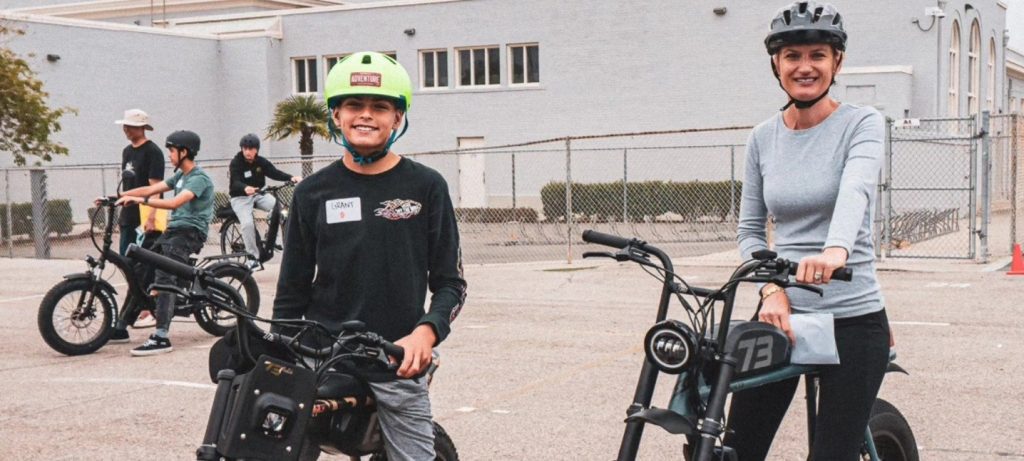
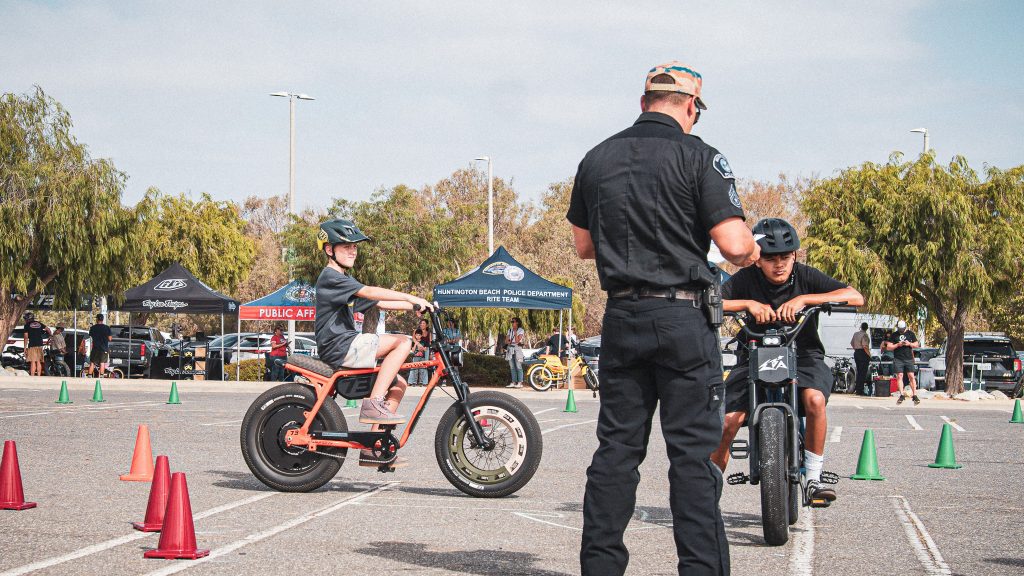
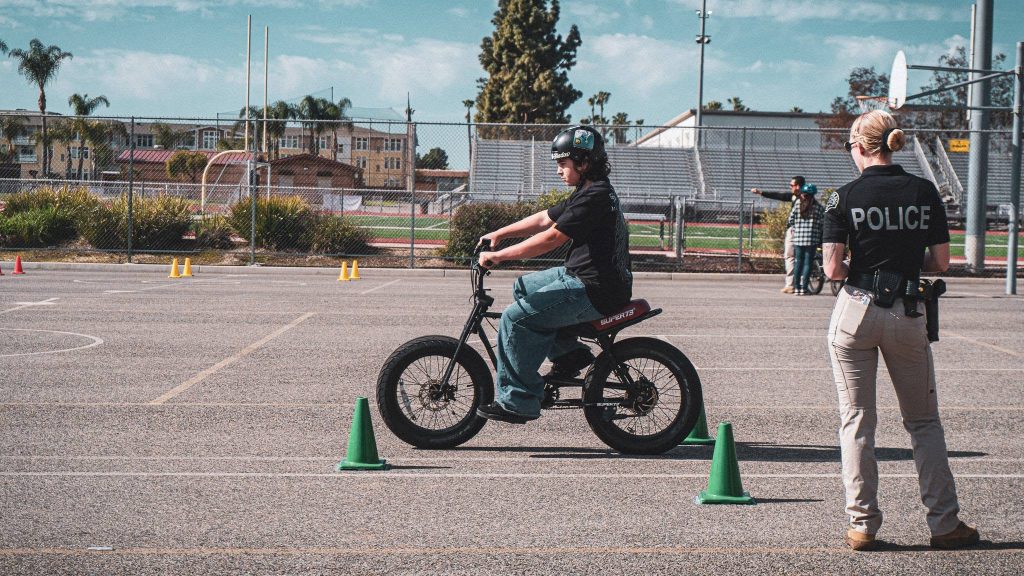
VoltVerified Rider Training (V2RT) is one example of how this can work in practice. A typical V2RT experience is approximately two hours and combines practical riding skills with rider education, assessment and parent involvement.
As of November 25, VoltVerified has trained 2,252 students and parents combined since May 2025. We also looked at collision reports for a group of 518 youth riders who attended training from May 2025 through August 2026. In the reports we reviewed, 3 of 518 (0.6%) were identified as at fault in a crash after training. That’s an early indication that we’re seeing very few of our trained riders in at-fault crashes. We’ll keep tracking that figure as more riders complete the course.
Removing the barrier to education
Approximately two hours. Free to riders and families. Come back anytime.
V2RT rider training is provided at no cost to participating riders and families.
Hands-on riding skills and rider education are combined into one practical training experience.
Riders can return as many times as they would like to reinforce skills, build confidence or simply get more practice.
Families should not have to pay for private instruction just to prove a young rider is ready. If education becomes part of the path to independent riding, communities should make that training accessible and give riders opportunities to come back, practice and keep improving.
The idea is bigger than any one program. States, counties, cities and school districts could adopt clear standards for recognized competency-based rider education and build programs that meet them.
Proposed independent-riding standard through age 17
| Rider | Class 1 / 2 | Class 3 | High-Speed eMoto / Motor Vehicle |
|---|---|---|---|
| ≤ 12 | Direct parent or guardian supervision where local law permits. | Not permitted | Applicable motor-vehicle laws apply |
| 13–15 | Independent after the knowledge and on-bike assessments for the class ridden. | Not permitted | Applicable motor-vehicle laws apply |
| 16–17 | On-bike assessment for every rider. A driver’s license may satisfy general traffic-law knowledge. | Eligible from age 16. Every rider demonstrates Class 3 riding skills before riding independently. | Applicable licensing, registration and vehicle rules |
This is a policy model, not a claim that every detail has already been proven at statewide scale. It should be tested, measured and adjusted based on what actually happens in the real world. If communities adopt this approach, we should track collisions, violations, repeat violations and whether training is actually changing rider behavior. If the data show that parts of the model need to change, then we should change them.
05 — Accountability
Independent riding should be a privilege a rider can lose.
Education has to come with accountability. One mistake can still be a teachable moment, but repeated violations — or one especially dangerous act — should tell us when a rider is not ready for independent riding.
A youth rider can lose independent riding privileges under this proposal.
Three separate sustained moving violations within 12 months, or a single egregious act that shows a serious disregard for public safety, should be enough to suspend that privilege and require some form of corrective intervention before it is restored.
That could include participating in a street takeover, deliberately riding at vehicles or pedestrians, or other behavior that creates an immediate and substantial risk of injury.
I would notify the family, give the rider an opportunity to challenge the finding, and set clear terms for getting the privilege back, including a violation-free period, corrective training and another riding assessment. The same process would apply through age 17, including to a teen who has obtained a driver’s license. A school would administer its campus permit. Any public-road restriction would have to come from the authority empowered to impose it.
Do not restrict every child because of what some riders might do. Focus the consequences on riders whose own behavior repeatedly shows they are not ready.
06 — Classification
Before we regulate “eBikes,” make sure the problem vehicles are actually eBikes.
This may be one of the most overlooked parts of the entire discussion. When a high-powered electric motorcycle, moped or other motor vehicle is described in a crash report, news story or community discussion simply as an “eBike,” it matters. If we classify the vehicle incorrectly, we can end up with bad data—and bad policy built on top of it.
California law already distinguishes these vehicles.
Vehicles that fall outside California’s lawful eBike limits may be entirely different types of motor vehicles. California’s Attorney General has specifically highlighted the importance of separating lawful eBikes from faster and more powerful electric two-wheeled vehicles.
Device recognition matters
Not everything called an “eBike” is an eBike.
Public discussion often lumps very different vehicles into one category. That can distort enforcement, crash reporting, injury data and ultimately policy.
A Class 1, Class 2 or Class 3 device operating within California’s lawful eBike definitions.
Under SB 1167, a highway moped must meet the statutory speed, power, equipment and certification requirements. Its top speed on level ground is 30 mph or less.
A moped-style device that exceeds eBike limits and lacks the required highway certification has no claim to public-road use as an eBike or street-legal moped.
An off-highway eMoto and a highway motorcycle have different operating rules. An electric motor-driven cycle designed for highway use has its own classification, with a ceiling of 3,750 watts under SB 1167.
The right place to ride depends on how the device is built and certified. A motorcycle made for off-highway use may be ridden in areas that allow it.
Before policymakers write new rules for “eBikes,” they need to know whether the vehicles creating the problem are actually eBikes.
California law update
SB 1167 clarifies what families are buying and what officers record.
California enacted Sen. Catherine Blakespear’s SB 1167 on September 30, 2026. The law generally takes effect January 1, 2027. It clarifies the rules for selling and labeling eBikes, mopeds, motor-driven cycles and off-highway electric motorcycles.
Take a device that can propel a rider to 25 mph on throttle alone on level ground. That exceeds California’s eBike limits. To qualify as a highway moped under the revised law, the device must also meet applicable Federal Motor Vehicle Safety Standards (FMVSS), have a 17-digit vehicle identification number (VIN) and carry a manufacturer’s safety certification label. Pedals and a “moped” listing tell a buyer very little on their own.
For a peace officer filing an injury or crash report involving an eBike, moped or motor-driven cycle, the new law requires recording the specified information from the device marking or certification label. If the required marking or label is missing, the officer records that too. That detail gives the next person reviewing the crash a better chance of identifying what the rider was operating.
Why that distinction changes the policy discussion
Of 394 collisions VoltVerified reviewed from September 2024 through August 2026, 95 (24%) involved something other than an eBike. Those 95 involved 62 unauthorized electric devices, 29 eMotos and four scooters. The review covered riders of all ages. Combining all 394 under “eBike” would give a school board or city council the wrong starting point for a youth eBike policy.
07 — Enforcement
Enforcement is part of the answer—but officers need the right information first.
Officers cannot consistently enforce electric-device laws if they cannot first determine what type of vehicle they are dealing with. Device recognition has to come first.
California POST-certified instructor training
Recognition. Enforcement. Education. Diversion.
- Identify the device correctly before deciding which laws apply.
- Understand California eBike and electric-device laws and apply them appropriately.
- Build local rider-education programs that reach young riders and parents before unsafe behavior turns into a collision.
- Use diversion when appropriate—education, counseling or corrective training instead of simply paying a fine—so eligible young riders learn from the violation rather than only being punished for it.
VoltVerified’s California POST-certified 40-hour eBike Instructor Course prepares officers to work across all of those areas. Diversion is especially important because many youth violations start with a lack of education, not deliberate defiance.
The goal is not to excuse dangerous behavior. It is to correct it. A free, repeatable rider-training option gives agencies another tool: a young rider can get the education, come back for more practice and reinforce the skills that may prevent the next violation or collision.
Repeated or deliberate dangerous behavior still calls for meaningful enforcement. Education and enforcement can—and should—work together.
08 — Shared data
Law enforcement and health systems should be looking at the same picture.
Law enforcement sees the crashes, traffic violations, device types and rider behavior on the street. Trauma centers and health systems see the injuries, helmet use and practical rider safety, hospitalization data, age trends and medical outcomes.
Schools have direct access to riders and families. Parents control what is purchased and, especially for younger riders, when and how it is used. Public-health organizations can help connect those pieces, fund prevention and evaluate what is actually working.
A shared safety ecosystem
Five partners. One clearer picture.
- Parents — device choice, supervision and reinforcement at home.
- Schools — access to families, education, permits and accountability.
- Law enforcement — device recognition, crash investigation, enforcement, rider education and diversion.
- Trauma centers — injury severity, helmet use, age trends, hospitalization and medical outcomes.
- Public health and funders — prevention strategy, funding, evaluation and connection of community data.
What better data should tell us
Not just “Are youth injuries increasing?”—but why.
Communities should be able to connect what is happening on the street with what is showing up in the emergency department.
- What type of device was involved—and was it legally classified?
- How old was the rider, had they been trained, and was an adult riding with them?
- Was a helmet worn, and was excessive speed a factor?
- Were there prior violations or previous intervention?
- Did education, enforcement or another intervention reduce future injuries or violations?
That is the kind of picture trauma centers, law enforcement, schools and public-health partners should be building together.
09 — Objections
The questions I hear most often.
Why not simply make the minimum age 16?
Because turning 16 does not automatically make someone competent, just as being younger than 16 does not automatically make someone unsafe. Age should matter, especially when deciding how much supervision a young rider needs. But before a rider is given independence, I would rather see actual knowledge, judgment and riding competency than rely on age alone.
Is certification realistic?
Schools already verify coursework and issue parking permits. A district could add a scheduled skills check and issue a campus eBike permit when the student passes. Public-road rules would remain a separate decision for lawmakers with that authority.
Would certification create an equity problem?
It could if we require certification but make families pay for it or travel long distances to get it. Access has to be part of the policy. V2RT is free to participating riders and families, takes approximately two hours, and allows riders to return as many times as they would like. If competency certification becomes a condition of independent youth riding, communities should provide free or subsidized training through schools, cities, health systems, grants and community partnerships.
Does this let dangerous young riders keep riding?
A rider who repeatedly puts others at risk could lose the credential under this proposal. Under a campus program, a school could suspend its permit and require the student to demonstrate safe riding again before bringing the bike back to school.
A practical framework communities can adapt
Five Principles for Smarter Youth eBike Policy
- Age should help guide supervision; demonstrated competency should determine independence.
- Get the device classification right before using the data to shape enforcement or policy.
- Meaningful education should come before independent riding—not after the first collision or citation.
- Schools should use access as leverage for education and accountability instead of relying only on prohibition.
- Enforcement should focus the strongest consequences on illegal devices and repeated dangerous behavior while preserving responsible supervised riding.
When I think about my own kids riding to school or to a friend’s house, I picture the actual trip. Where will they have to look back and move left? Which driveway is hard to see around? Can they stop in time if a driver pulls across their path? Riding together gives me a chance to see how they handle those decisions while I’m still there to help.
Before I let my child ride this route alone, what have I actually watched them do?
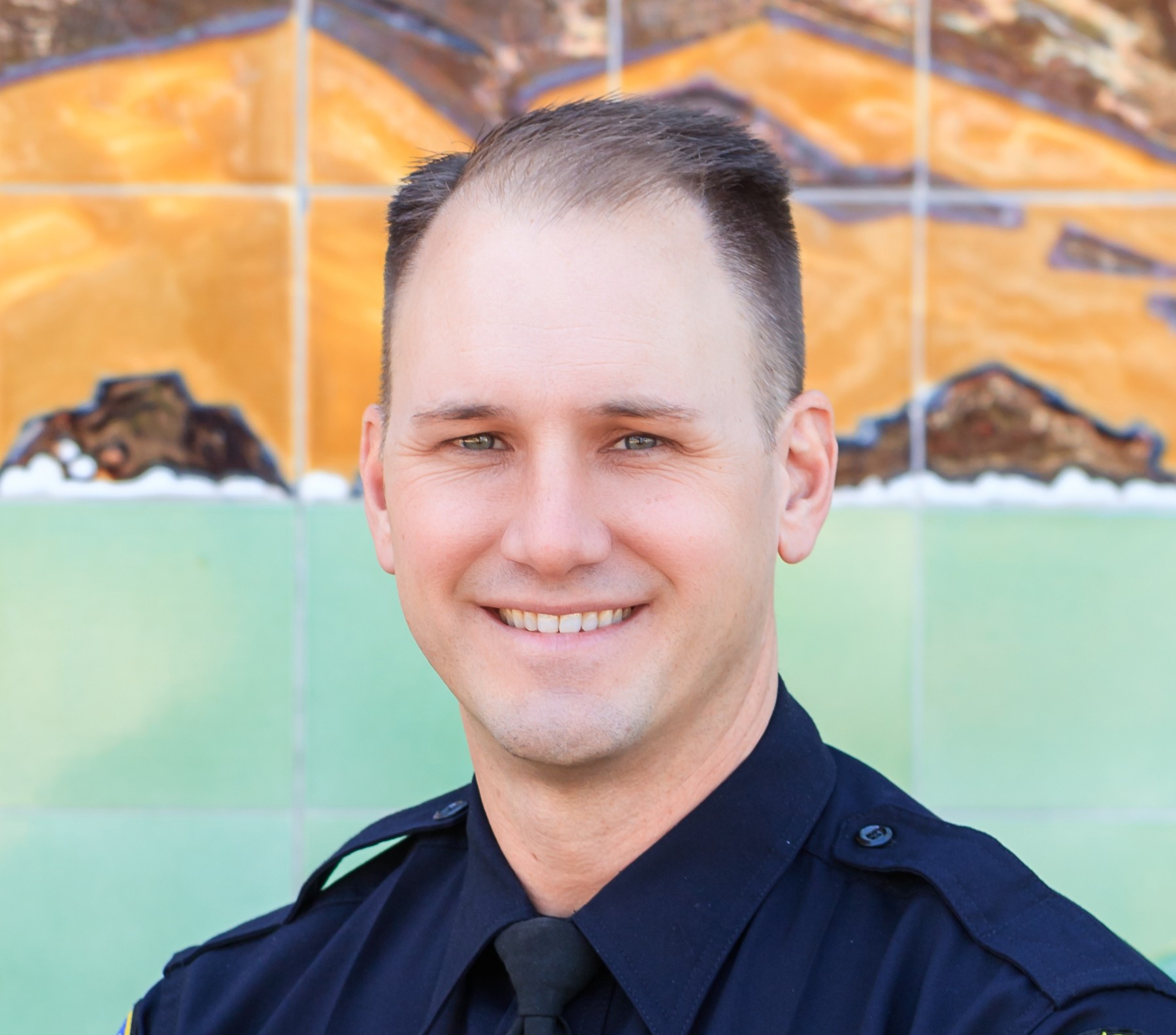
Mike Thomas is the founder of VoltVerified and a California law-enforcement professional whose work focuses on eBike safety, rider education, law-enforcement training and community implementation. The views expressed in this analysis are his own.
Primary Sources & Further Reading
The record behind this analysis.
UC San Diego — Statewide California eBike Injury Analysis
California collision and injury analysis, 2018–2024.
Rady Children’s Health Orange County / CHOC — Pediatric eBike Trauma
Pediatric eBike trauma patients treated at Rady Children’s Health Orange County.
New Jersey Motor Vehicle Commission — eBike Requirements
Official state licensing, age and registration requirements.
Newport-Mesa Unified School District — Bike & eBike Protocols
District education, testing and campus-access requirements.
California Department of Justice — eBike Legal Requirements
California guidance regarding lawful eBikes and other electric two-wheeled vehicles.
JAMA — Pediatric eBike and e-scooter injuriesNovember 2026 study across six U.S. pediatric health systems.
American Academy of Pediatrics — eBike guidance for familiesAge and eBike class recommendations for parents.
City of San Diego — Electric Bicycle Safety Pilot ProgramMunicipal Code § 84.19 and the local under-12 operating restriction.
California AB 1569 — School eBike safety trainingChapter 128, Statutes of 2026. Standardized training for grades 7–12.
California SB 1167 — Vehicle classification and reportingChapter 846, Statutes of 2026. Vehicle definitions, labeling and crash reporting.
VoltVerified — Training follow-up and collision reviewProgram participation, the 518-rider follow-up and the separate 394-collision review.